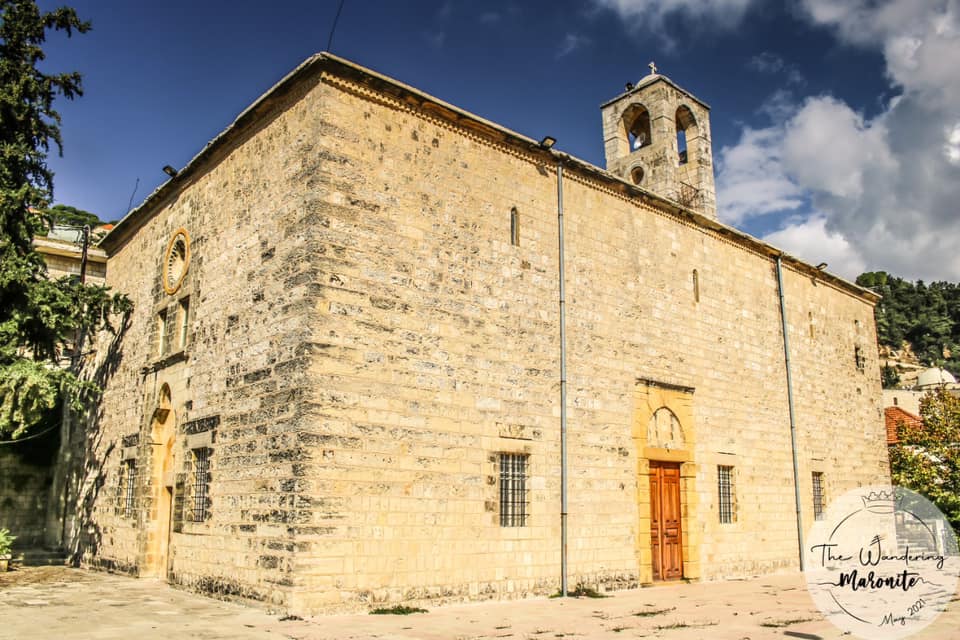
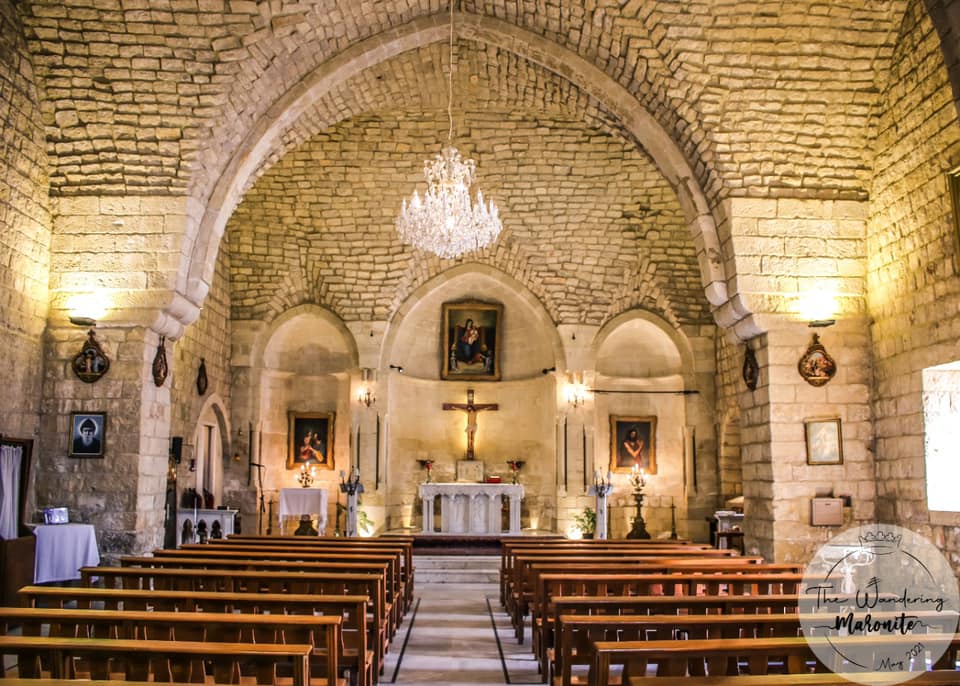
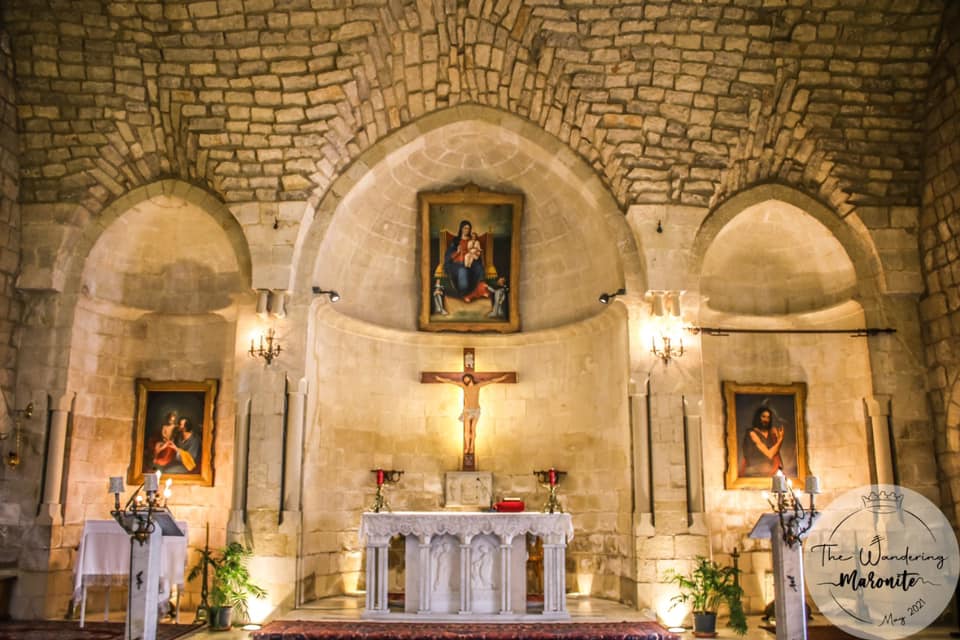
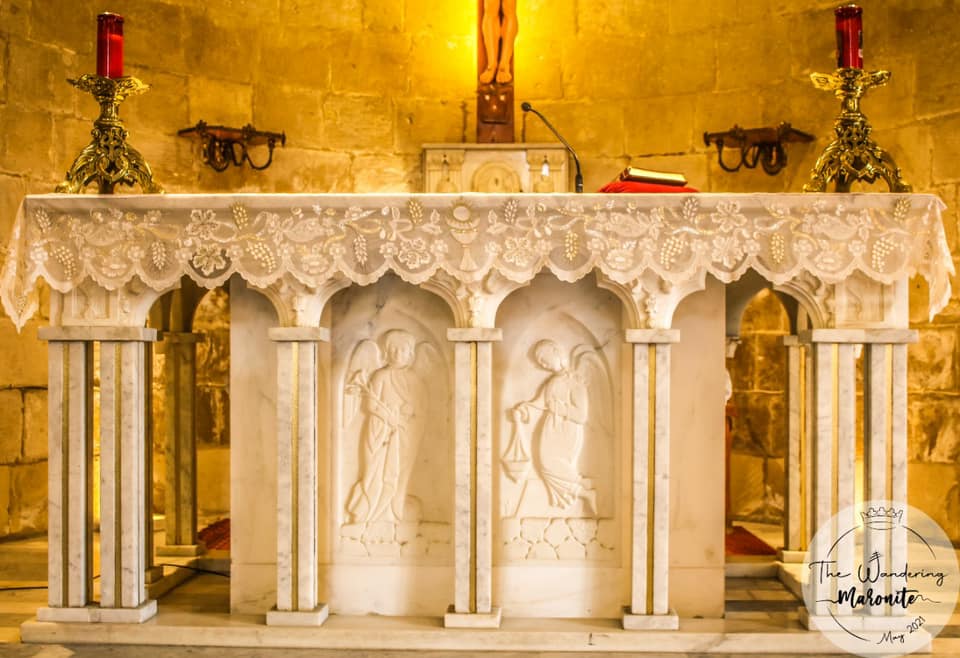
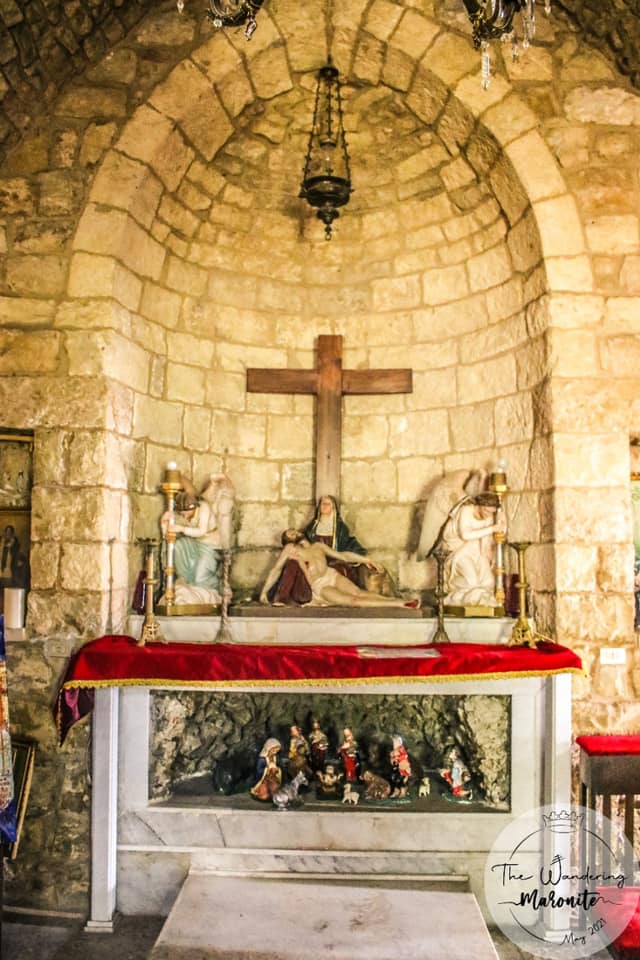
كنيسة سيّدة الورديّة الدلغانة - دير القمربنيت في ثلاثينيّات القرن الثامن عشر، وأتمّ البناء سنة ١٧٦٠ على يد الأب متّى الحكيم الحلبيّ طبيب أمراء دير القمر. تُلاصق الكنيسة كابيلا سيّدة الرحمة وهي تعود للنصف الثاني من القرن التاسع عشر. تحوي الكنيسة على العديد من اللوحات التصويريّة أهمّها لوحة سيّدة الورديّة وهي من عمل كنعان ديب الدلبتاوي سنة ١٨٦٤، ومار يوسف لنجيب شكري تعود لسنة ١٩١٠.The church of Our Lady of the Rosary El Delghane - Deir el QamarThe church was built in the third decade of the the XVIIIth century. The construction was concluded in 1760 under the supervision of Fr Matta el Hakim from Aleppo who was the personal doctor of Deir el Qamar’s princes. Adjacent to the church stands a small chapel dedicated to our Lady of Mercy dating back to the second half of the XIXth century. The church holds many paintings inculding Our Lady of the Rosary by Kanaan Dib dating back to 1864 and St Joseph by Najib Chukry dating back to 1910.
Our Lady of Lebanon بازيليك سيدة لبنان, Harissa, Lebanon
From Monday till Saturday: 7-8-9-10-11-12 a.m. and 4-5-6-9 p.m. Sunday: 7-8-9-10-11:30 -12:30 a.m. and 4-5-6-9 p.m. Every day: A prayer of the rosary at 7.15 p.m. Every Wednesday: Rosary Prayer and Mass with procession at 8.30 p.m.
سيدة لبنان
1854
Harissa
Keserwan
Mount Lebanon
Meaning of “Harissa”
The word Harissa comes from the word Haras which means, in Arabic and Hebrew, a sharp blade, a knife, any cutting tool, or also, a sheer edge. And this corresponds to the nature of the hill on which stands the village, named by its inhabitants “Roueiss”. Therefore, some historians believe that the old Semitic word harissa means roueiss in Arabic, a steep-sided high hill. Overlooking the bay of Jounieh, the Sanctuary is built on a 350 hectares piece of land, 650m high from sea level, and 26kms to the north of Beirut, in the Mohafazat of Mount Lebanon. As it neighbors the village of Daroun, it is part of the Kesrwan caza. It is also close to Bkerke, see of the Maronite Patriarchate. It is famous for its greenness, the multitude of its trees, the abundance and purity of its sources. It is the door to Paradise… How it all started
On the fiftieth commemoration of the “Immaculate Conception” dogma declared by His Holiness Pope Pius IX in 1854, His Beatitude Maronite Patriarch Elias Hoayek and the Apostolic Nuncio Carlos Duval decided to erect a religious monument that would be a keepsake of this event. According to Father Henri Jalabert sj, Lucien Cattin, Father Superior of the Jesuits in the Middle East at the time, suggested to raise a big statue of the Virgin that could be seen from far and that would illustrate the Honoring of and the attachment of the Lebanese people to Mary. After the Patriarch and the Nuncio had sought advice from bishops, priests, monks and laics, the sanctuary was named “Our Lady of Lebanon”, and the project was launched. Construction
After consulting with engineers who were authorities in the field, a place at the top of the Harissa hill called “the rock” was chosen to build the sanctuary, and the implementation phase got close. Committees began to raise funds in order to execute the project. The generosity of the Lebanese people conveyed their love for Mary. After negotiations, Mr. Francis Yaacoub sold the land to the Patriarchate for the symbolic sum of fifty Ottoman Pounds. The laying of the foundation-stone took place in October 1904, but work was interrupted for several reasons; one of them was the fear the land could not carry a monument of that size. In 1907, Patriarch Hoayek and Msgr. Fridiano Giannini, the new Apostolic Nuncio, resumed the work and made some adjustments to the project such as enlarging the west side of the sanctuary. To make sure the construction was carried out appropriately, a deed was signed in 1906 with a contracting company, as the first party and, as the second party, skilled master-artisan Ibrahim Makhlouf (from Ain el Rihaneh). The statue was built in 1907. It is good to keep in mind that Father Chucrallah Khoury, Superior of the Lebanese Maronite Missionaries was from the beginning, the Patriarch’s right hand man in the management and the execution of the project. He was elected Father Superior of the Congregation, after the election of Father Youssef Moubarak as Bishop of the Saida Diocese. With the help of the Apostolic Enunciator, and particularly Father Pere, Secretary of the Enunciator, and Cattin, Father Superior of the Jesuits, the Patriarch was able to overcome the financial problem – resulting from the volume and the cost of the project - by sending a letter to the Maronite “Wakfs” and charity organizations, asking them to pay a preset sum of money, to be collected by Father Chucrallah Khoury. Building the Sanctuary and the statue cost approximately 50000 gold French francs, donated by believers; among them was a French lady who wished to remain anonymous and made a contribution of 16000 francs. The land was offered by the Maronite Patriarch and the Nuncio. According to his last wishes, Bishop Duval’s body was transferred from Beirut to Our Lady of Lebanon Sanctuary. On the west wall of the shrine, is placed a commemorative marble plaque on which is engraved in the Latin language the history of the event, in appreciation of Duval’s love to the Virgin and his passion for her sanctuary in Lebanon.
Launching
To erect such a monument, a faraman (sultan’s decree) stating the approval of Ottoman authorities, ruling then, had to be issued. Mount Lebanon “Moutassaref”, Mouzher Bacha, sent a telegram asking for Istanbul consent and, almost miraculously, received a positive answer only a few hours later. At the beginning of 1908, the shrine and the statue’s pedestal were executed under the supervision of Father Chucrallah Khoury, officially assigned by the Patriarch to take the lead on the project. Shortly after, Our Mother Mary’s statue was built, and inauguration took place on May 3rd, the first Sunday of that month. At 10.00 am, Msgr. Giannini started the inaugural ceremony with prayers and then blessed the sanctuary and the statue, thanking God for an achievement that would nurture and develop real faith. The devoted assembly was informed of His holiness Pope Pius X’s message for the showering of heavenly blessings on all those who had had contributed to the execution of the project, or those who were attending the launching ceremony. Amid the guests, were Lebanese Brigadier Barbar Beik El Khazen, representing Mount Lebanon “Moutassaref” Youssef Franco Bacha, and His Excellency Habib Beik Bitar, “Ca’im-macam” of the Caza of Kesrwan, as well as large crowds of believers and visitors. The ceremony was followed by the holly mass, celebrated by Patriarch Hoayek, bishops, general superiors, representatives of congregations from oriental and western churches and many priests. During his sermon, the Patriarch highlighted the Lebanese people love and devotion to Mary, and asked for her protection and her unfailing intercession. At the end of the mass, he led a solemn procession around the sanctuary, carrying the icon of the Holy Virgin. He declared first Sunday of May as the feast of Our Lady of Lebanon.
The Management of the Sanctuary Following the inaugural celebrations, as mentioned in Article 4 of the deed registered in Bkerke on January 18th, 1907, Maronite Patriarch and Apostolic Nuncio officially entrusted the management of Our Lady of Lebanon Sanctuary to the Lebanese Maronite Missionaries, through their general Superior, Father Youssef Moubarak, at the Enunciator’s location in Harissa. It wasn’t too late in time when more lots of land were purchased in order to improve the facilities dedicated to serve the believers and visitors, and gradually, the shrine became what it is today, an international place for worship. Shrine Description
An 8 by 8m chapel with a seating capacity of 100 people was built under the statue of Mary, the Mother of God. It was designed by famous French architect, Gio. The wooden statue of Mary Mother of Light (that toured almost all Lebanese cities and villages in 1954) stands next to the square stone altar. On the middle of the tabernacle are engraved a cedar and bunches of grapes. Stained glass windows are decorated with the consecrated wafer’s symbols, grapes and wheat ears. The seven-piece-bronze statue of Our Lady of Lebanon is 8,5m high, with a 5m diameter; it weighs 15 tons and is painted in white, for more splendor and magnificence. It was manufactured in Lyon (France), under the supervision of Mr. Durenne who escorted it to Beirut port at the end of July 1906. The 20m high pedestal of the statue has the shape of a trunk sculpted in a natural stone. The lower diameter measures 64m and the top part, 20m. A 104 steps staircase was built to reach the top of the statue. (A drawing of the statue and its pedestal by famous painter Daoud Corm is kept in the basilica.) Our Lady of Lebanon Basilica
In 1956, a plastic and wooden tent was built on the west side of the shrine’s entrance in order to welcome the increasing number of believers and visitors for masses, especially throughout the month of May. As a result, on the golden jubilee of the shrine, it was decided to build a bigger church, to accommodate the large crowds of believers. On the 31 of May 1970, the foundation stone of the basilica – to be- was laid by His Beatitude Maronite Patriarch Paul-Pierre Meouchy, in presence of Lebanese President then, Charles Helou, and his Prime Minister Rachid Karame, ministers and deputies, Orthodox and Catholic Bishops and numerous believers. From the start, Patriarch Meouchy handed over the management and the execution of the basilica to the Lebanese Maronite Missionaries through their Superior, Father Sassine Zeidan. He was assisted by an executive committee formed towards the end of 1968, following a meeting between Patriarch Meouchy and Father Sassine Zeidan. This committee was comprised Father Sassine Zeidan (president), Lebanese Missionary, Father Youssef Andary, architect Adib Sader (secretary), pharmacist Cesar Chalhoub, engineer Emile Kayssar (Director General of the Ministry of Public Works), Joseph Salhab (Director General of the Ministry of Tourism), architect François Chemaly (President of the Municipality of Daroun-Harissa), and Fouad Boulos (President of Harissa teleferic’s council). This committee worked to insure information, financial, architectural and logistical aspects of the project in order to start building. Architects were asked for detailed drawings and plans.
Choice of the Design
To choose the best design, Patriarch Meouchy and Nuncio Alfredo Bruniera constituted an arbitration committee composed of the Nuncio himself, Father Sassine Zeidan, representing Patriarch Meouchy, and five eminent architects: Georges Maroun, President the Order of Engineers and Architects, Henri Eddé, former President the Order of Engineers and Architects, Mitri Nammar, Director of the urban planning Department, and two other French architects. After eliminating two of the four projects, and hesitating between choosing either José Husseini’s or Pierre Khoury’s proposals, the committee voted for the last one by four votes against three. Construction Work
The construction work went on uninterruptedly, even in the hardest times. Once the leveling of the land was first achieved, the foundations were completed by June 1971, the walls and the esplanade were built, and the rest of the work continued. Engineer Louis Cordahi executed some of the work, but the bigger part was accomplished by engineer Mouin Aoun and his team who – armed with faith and perseverance, and entrusted by Father Paul Najm, General Superior of the Missionaries - were able to built a high ceiling in the shape of a Phoenician boat with 64m long curved beams. To execute that part, engineers had to consult two French companies: one, to supervise the assembly of the scaffold and the other one, to assist in the design and the assembly of the immense glass front façade.
يعود بنا هذه الكنيسة إلى القرون الوسطى وتتألف من كنيستين: الكنيسة القديمة جدرانها مكسوة بالجداريات. هي من النوادر في العمارة الكنيسة لأن فيها حنيتان يتوسطهم رسم المصلوب. مواضيع الجداريات: الشفاعة، العذراء على العرش محاطة بمار بطرس وبولس، ذبيحة النبي ابراهيم، آثار لجدرانيات أخرى باتت مندثرة. اما الكنيسة الثانية فهي أحدث عهداً ملاصقة للأولى، مبنية على النمط البازيليكي بثلاث اسواق، وامامها رواق بالحجر المعقود. بقيت الكنيسة مستخدمة الى القرن التاسع عشر حين نزح آخر موارنة البلدة. ومنذ عام ٢٠١٢ انطلق مشروع ترميم الكنيسة.
This church is built in the medieval ages, and is composed of two parts: The old church has walls filled with frescoes. It is one of the very rare churches in which you can see the crucified drawn between two naves. The drawings are as follows: The Deisis, Mary the throne of wisdom, surrounded by Saints Peter and Paul, Abraham's sacrifice, in addition to different frescoes that are damaged and can hardly be seen now. The second church is just next to the first, but built in a later era, in a basilical form with three aisles. The church was still in use by the maronite community until the 19th century. Since 2012 a project to renew the church was launched.
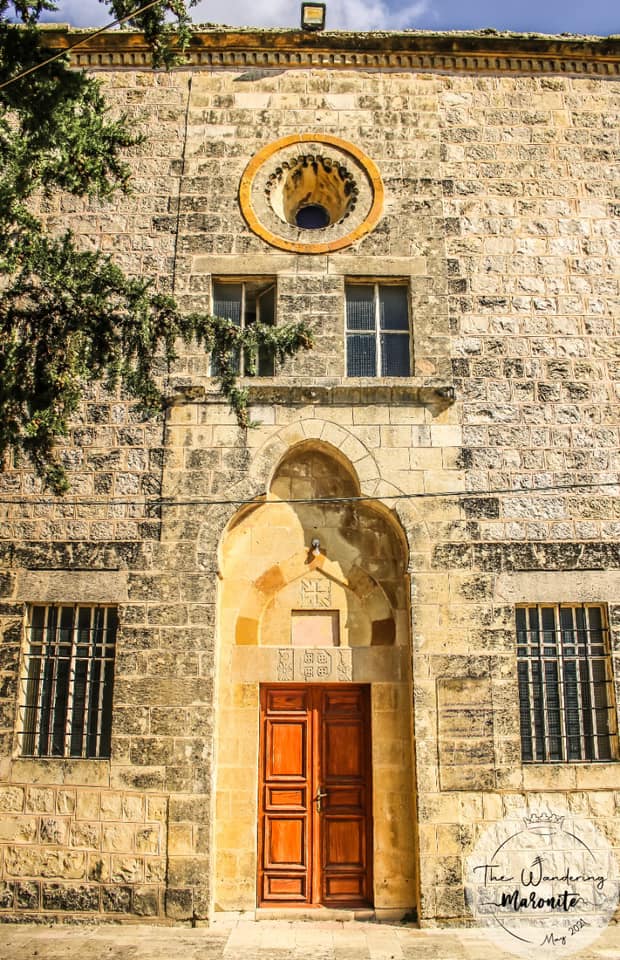
بُنيت الكنيسة بعد قدوم آل الكك الى دير القمر وتركهم بلدة دميت، وأُكمل البناء سنة ١٦٨٤. الكنيسة وقف لآل الكك، رُمّمت ووُسّعت على عدّة مراحل. تتميّز الكنيسة بمذبح مار أنطونيوس الكبير وهو ذكر من كنيسة دميت الأثريّة، وأيقونة مار جرجس الشهيد.
St. George’s church - Deir el Qamar
The church was built by the Kek family after they came to Deir el Qamar from Dmit, and completed in 1684. It is a private family chapel restored on many occasions. The church holds a side altar of St. Anthony the Great, reminiscent of the historic church in Dmit, and a local icon of St George.



-250x165.jpeg "1661527597_harissa_(4) - Directory of Churches in Lebanon")
Reviews are disabled, but trackbacks and pingbacks are open.