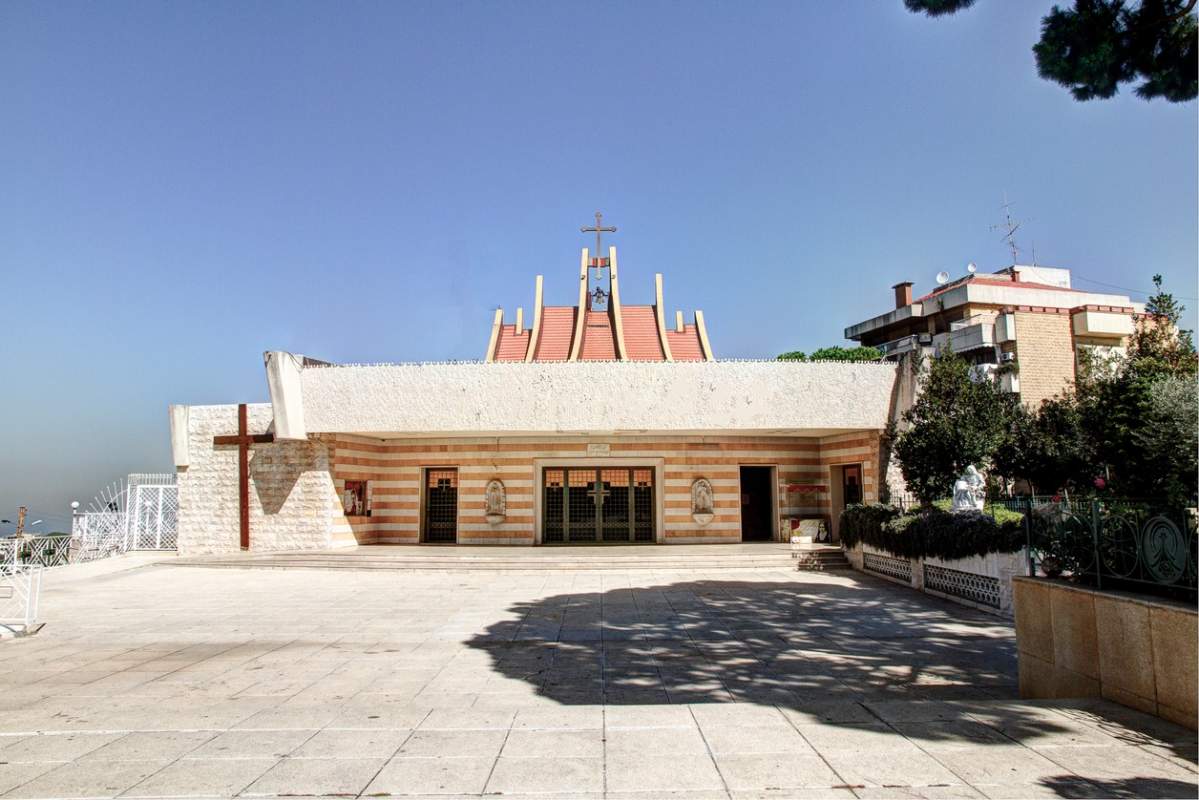
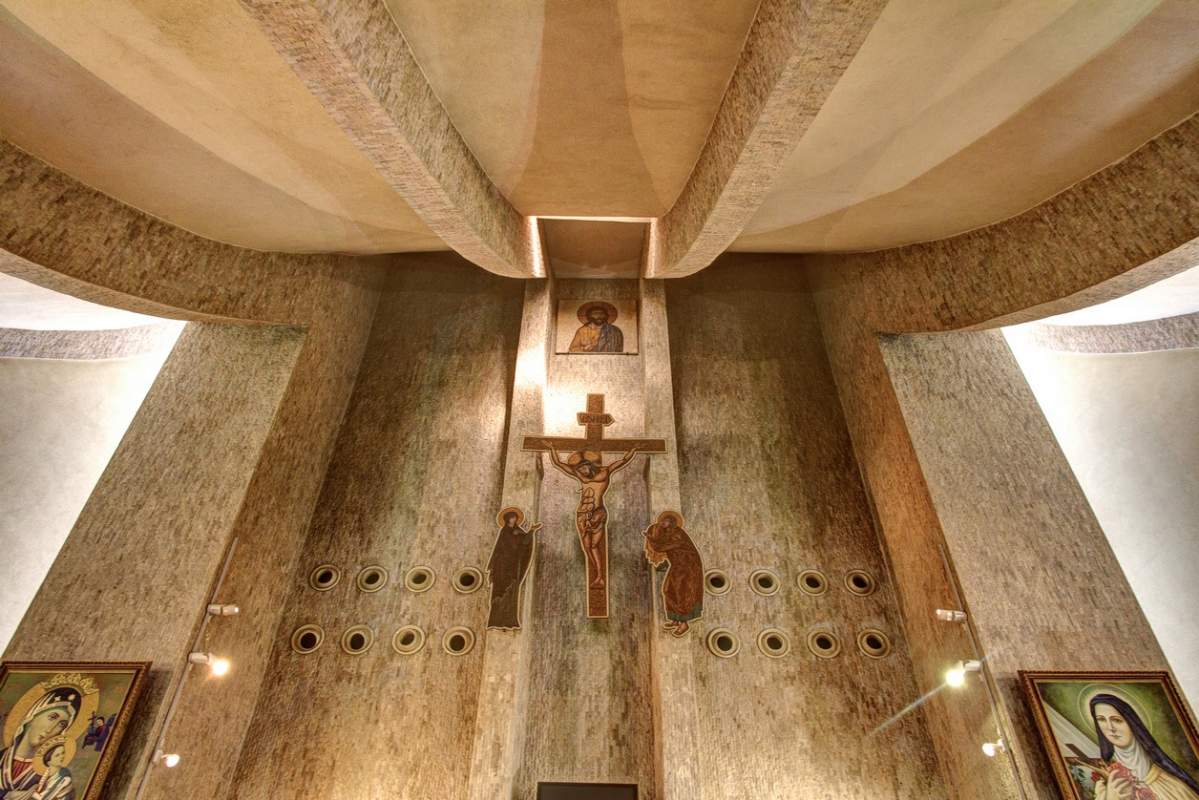
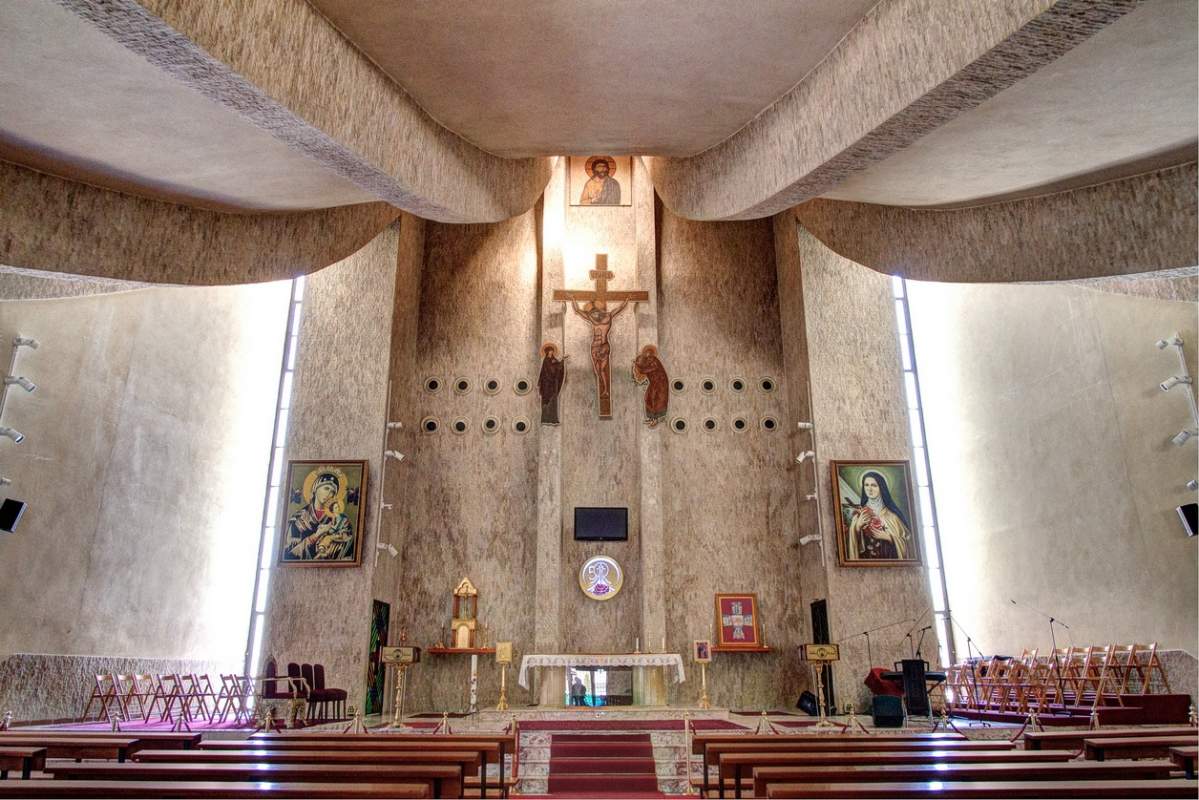
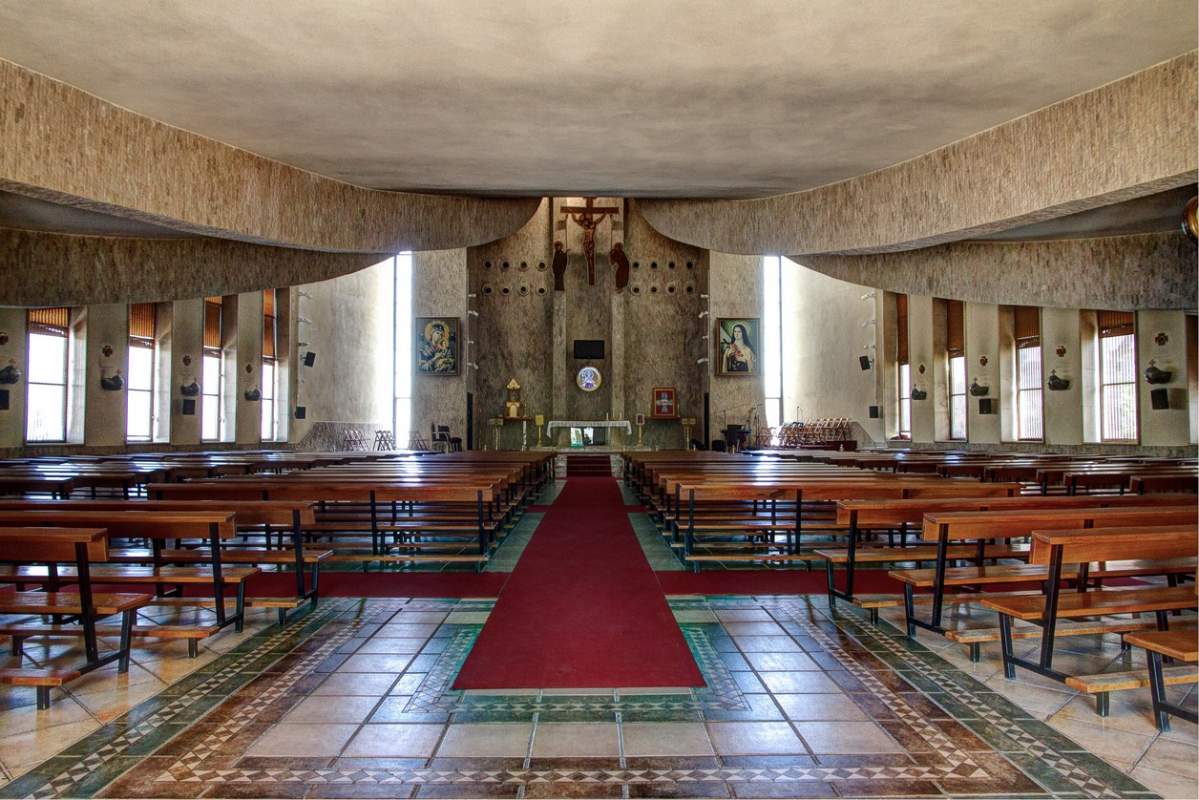
Mansouriyeh – Sainte Therese

Paroisse Sainte Thérèse Beit-Mery Mansouriyeh, Lebanon

Website

Mansouriyet El-Matn

Metn

Mount Lebanon

Visited 3464 times, 2 Visits today

Reviews are disabled, but trackbacks and pingbacks are open.

Related Listings

Hermel – The monastery of St Maroun on the Orontes

Hermel, Lebanon

دير مار مارون على نهر العاصي

Hermel

Hermel

Baalbek-Hermel

The monastery of St Maroun on the Orontes - Hermel

The monastery was originally a natural cave consisting of three sections, it was expanded by Roman builders working in nearby stone quarries. It is situated above Ain El Zarqa, one of the sources of the Orontes River, and connected to the river via a corridor carved into the mountainside. This was used to fetch water and provide a hiding place during enemy attacks. In the VIth century, Maronite monks sought refuge in the cave after facing persecution in northern Syria, where their monastery was destroyed and its contents dispersed. The monks expanded the cave and carved an altar, turning the cave into a new monastery. This marked the beginning of the Maronite migration to the mountains of Lebanon along the Orontes River. Over time, the monastery was neglected and became an abandoned farm. In 2011, it was visited by Patriarch Bechara Boutros Al-Rahi and has since been restored in 2018, returning to the Maronite Church. The monastery serves as a testament to the spread and perseverance of the Maronite Church in the Levant.

Obeidat – The church of St Eusebius

Saint Eusebius Church, Aabeidat, Lebanon

كنيسة مار أوسابيوس

Aabaydat

Jbeil

Mount Lebanon

كنيسة مار أوسابيوس - عبيدات

بُنيت الكنيسة الحاليّة سنة ١٨٨٩ بسعي الخوري يوسف نصر فوق مقامِ أقدم كان بدوره بُني مكان هيكلٍ وثنيّ ما زالت آثاره ظاهرة في البناء: وهي كناية عن حجرٍ يحوي كتابة يونانيّة وبعض الأعمدة. أمّا تسمية الكنيسة مار أوسابيوس فنادرة لأن الموارنة غالبًا ما نادوه بلقبه السريانيّ حوشب. تشتهر الكنيسة بوجود جحر للنذورات، فمار اوسابيوس شفيع المصابين بالثآليل. تضم الكنيسة لوحة محليّة لمار حوشب مجهولة الراسم.

The church of St Eusebius - Obeidat

The current church was built in 1889 under the mandate of Fr. Youssef Naser over an older shrine, that was built over a pagan temple with some of its ruins still visible: some columns and an epitaph with greek inscriptions. The dedication of the church to St Eusebius is unique because the maronites usually call him by his Syriac attribute Hawsheb meaning the wise one. The church is famous for being a pilgrimage site for people with warts. The church holds a local icon of the saint drawn by an unknown painter.

Enfeh – Deir Saydet el Natour

Deir Saydet el Natour, Hraiche, Lebanon

سيدة الناطور

Enfeh

Koura

North

The convent’s ancient origin is attached to a legend. A rich man of the region committed adultery; filled with remorse, he attached a padlocked iron chain to his ankle and threw the key into the sea-shore and survived on the fish brought to him by local fishermen, who called him the guardian of the cavern. One day, a fisherman brought him a fish, in whose entrails the hermit found the key of the padlock. He knew then that God had delivered him from his suffering, and he built a convent above the cavern. He dedicated it to The Mother of God, but it also took the name of the Guardian.

The daily life of the convent is regulated by the flow of visitors who come to fulfill vows and make prayers. Sister Catherine al-Jamal is the principal resident of Dayr al-Natour, and she has done everything within her power to restore it.

According to the Crusader document, the Monastery of the Presentation of Our Lady Natour was built by Cistercians. Indeed, the Church interior resembles that of the Cistercian Church of Balamand, built in 1157. Otherwise, the history of Dayr al-Natour is hidden in obscurity, although it is said that the local Orthodox community took it over after the departure of the Crusaders. Its name is almost unmentioned by historical sources during the Mamluk and most of the Ottoman period, although it is reported that French corsairs attacked the Monastery at the beginning of the eighteenth century and killed a monk.

In 1838, the Ottoman authorities gave permission to the Monastery to be rebuilt. In the second half of the nineteenth century, it contained several monks and a superior, and it possessed fifteen dunums of land. During the First World War, it was bombarded by a Russian ship. A few years later, the Monastery lost its last Superior, Basilios Debs, who became Archbishop of Akkar. After his departure, monastic life ended at Dayr al-Natour.

During the twentieth century, the deserted monastery became a refuge for shepherds from the neighboring regions. In 1973, Sister Catherine al-Jamal moved to Dayr al-Natour and began to restore it from its ruin.