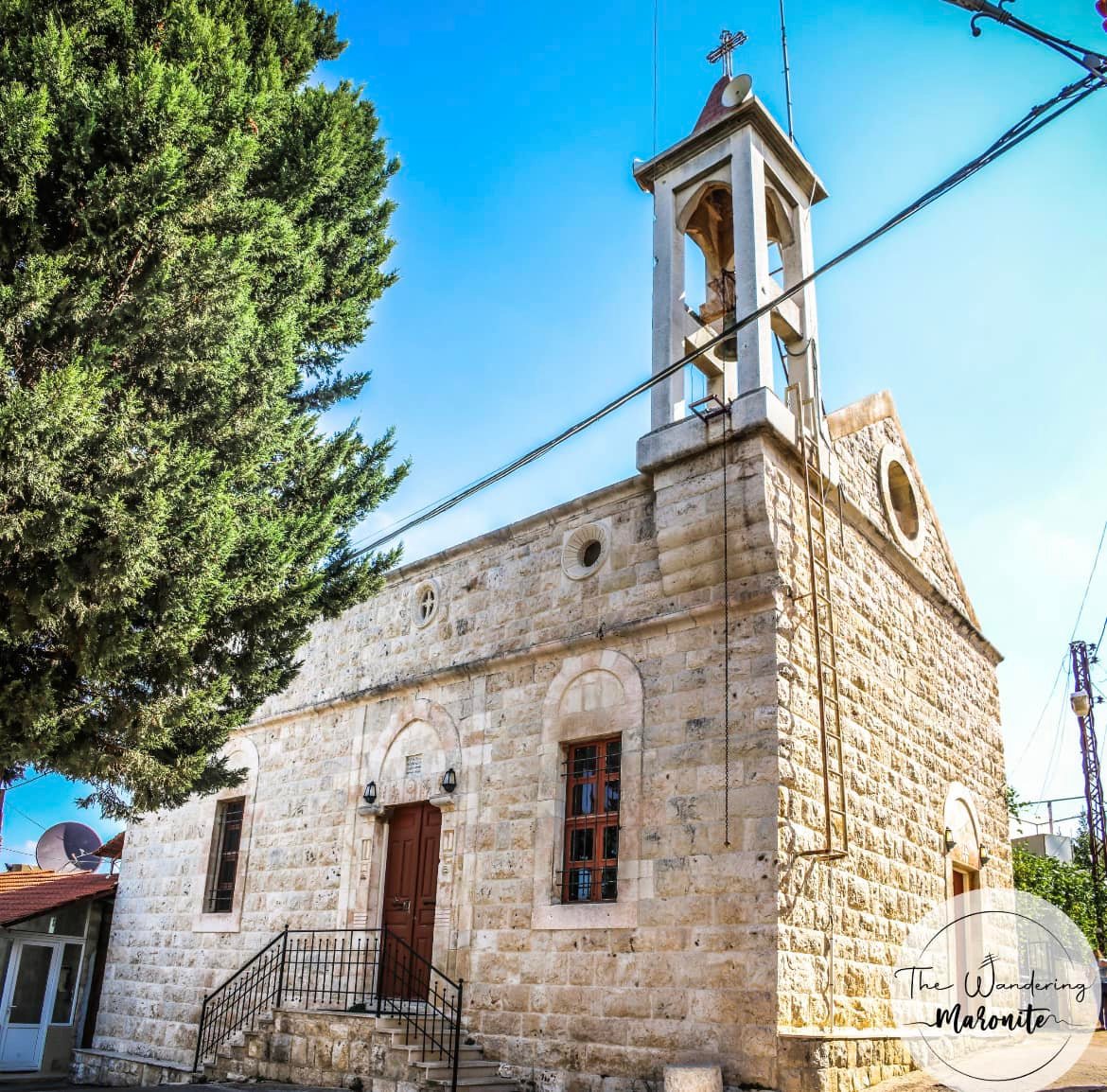
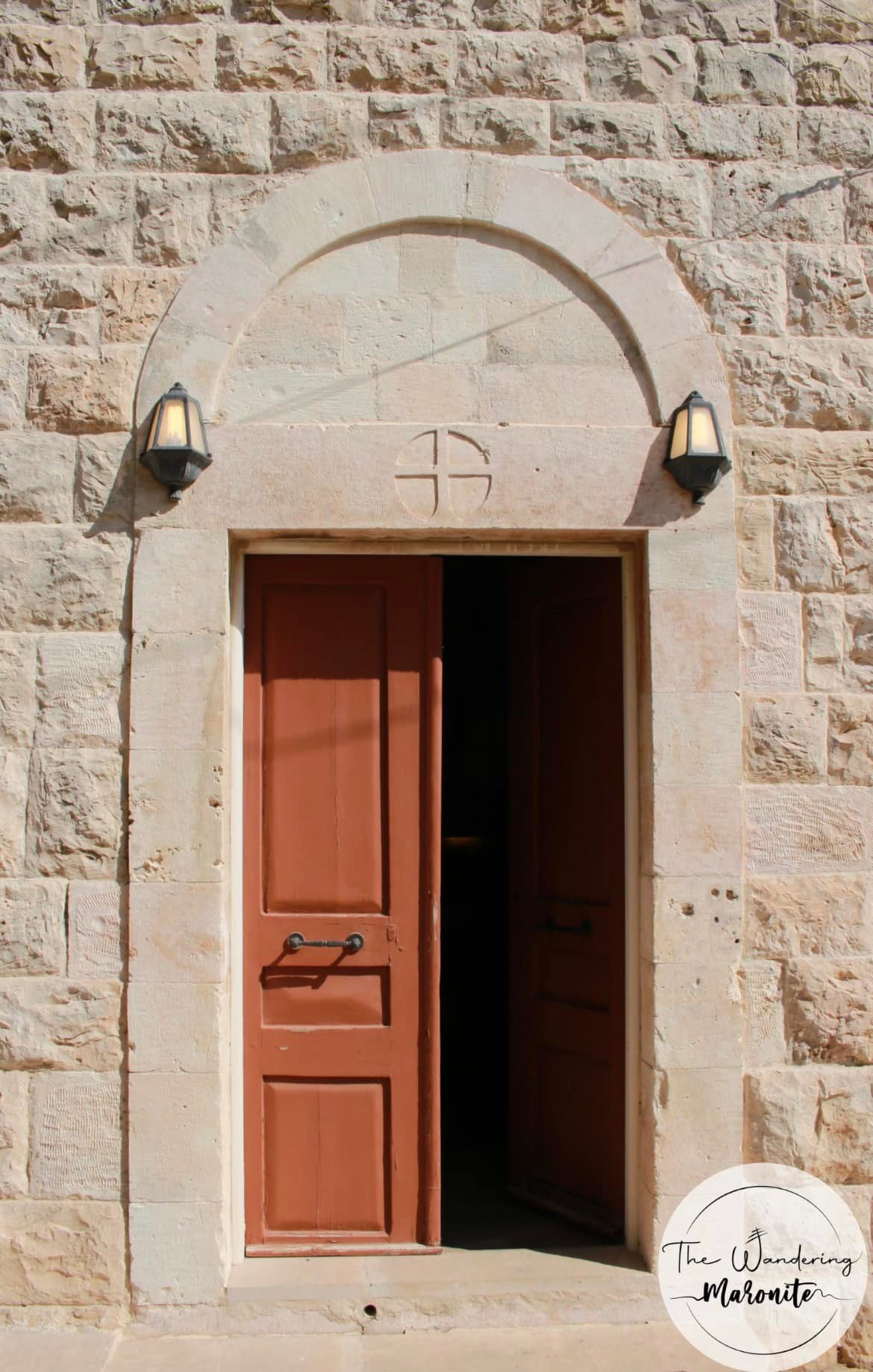
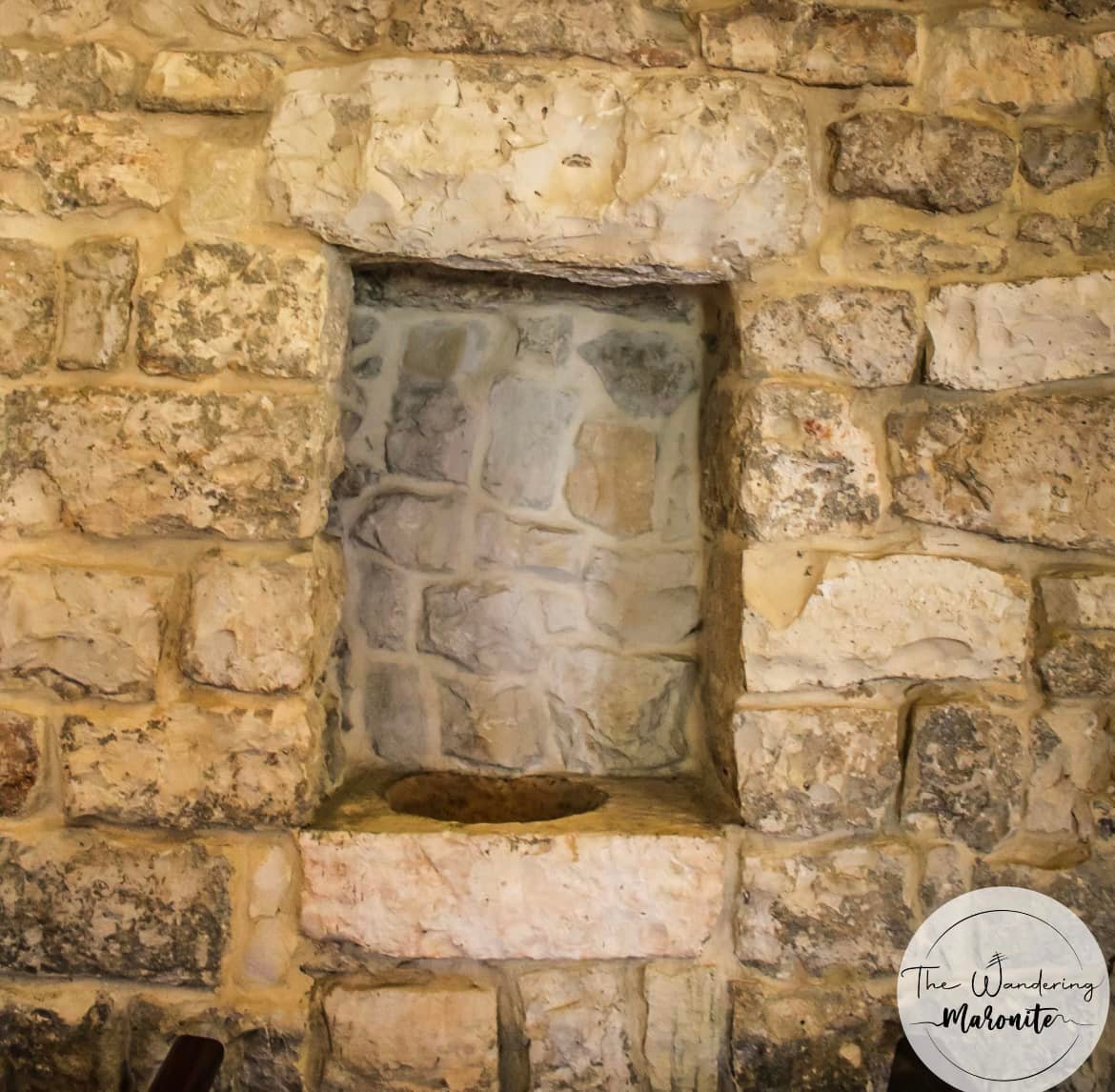
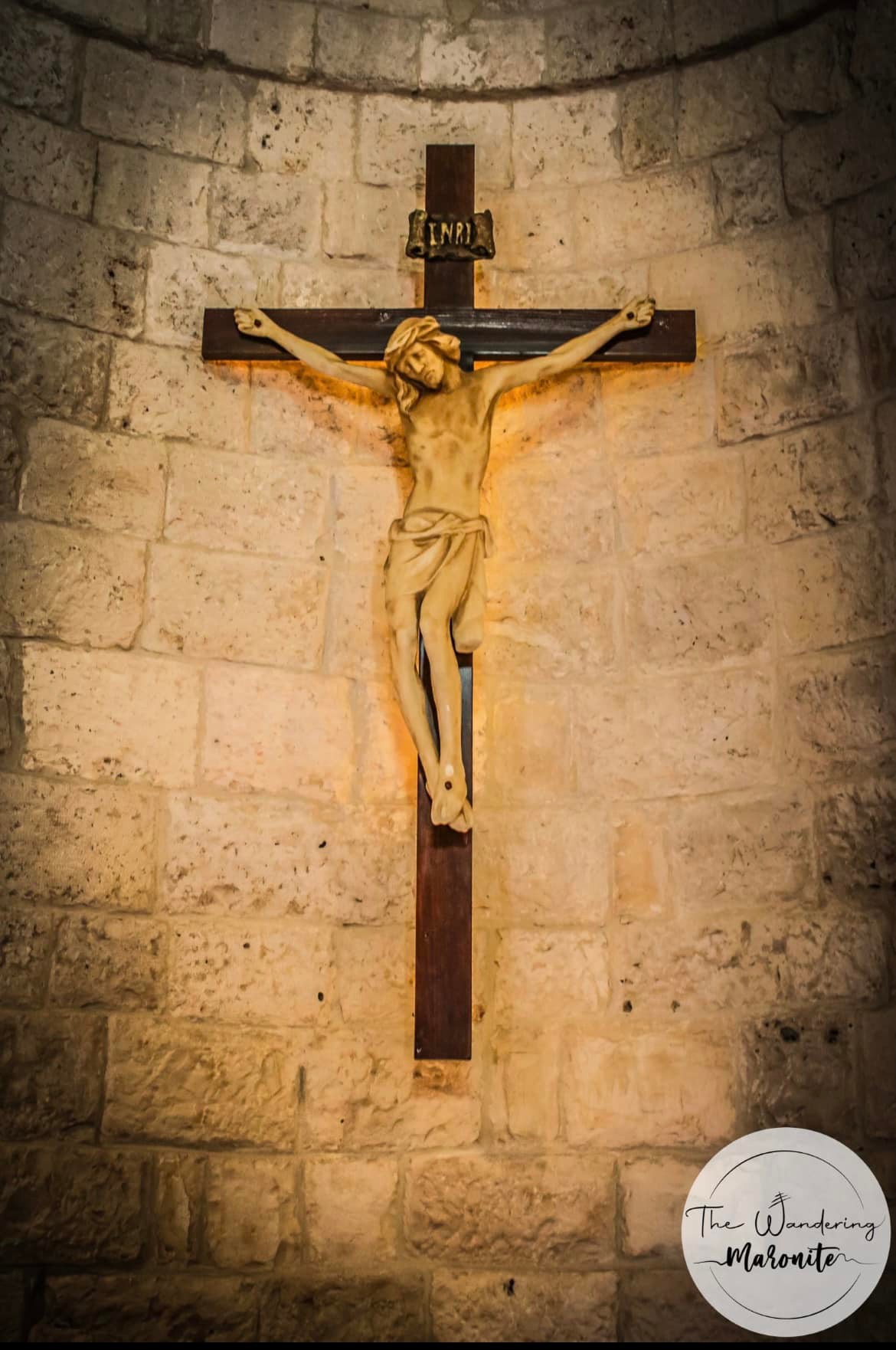
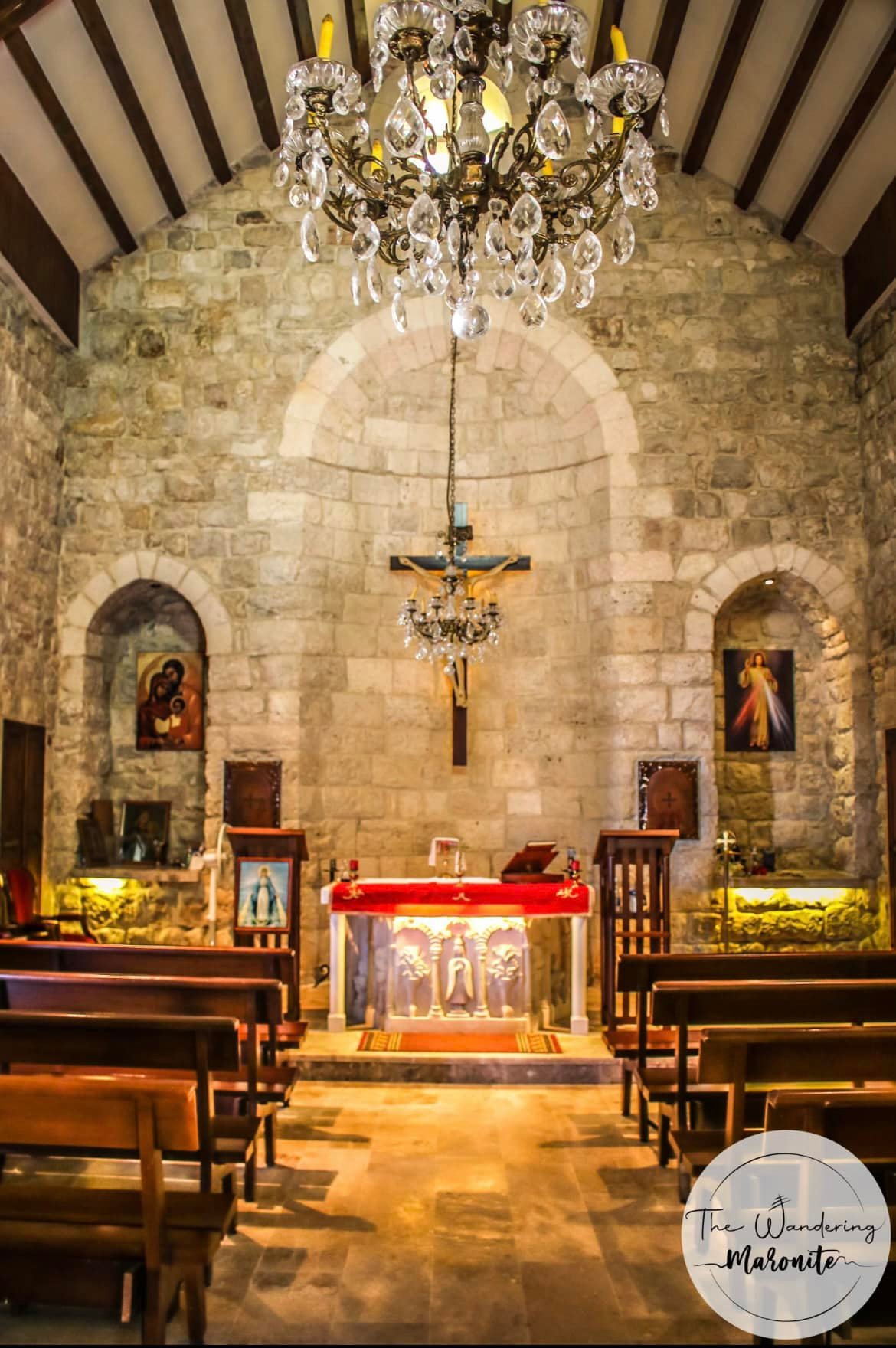
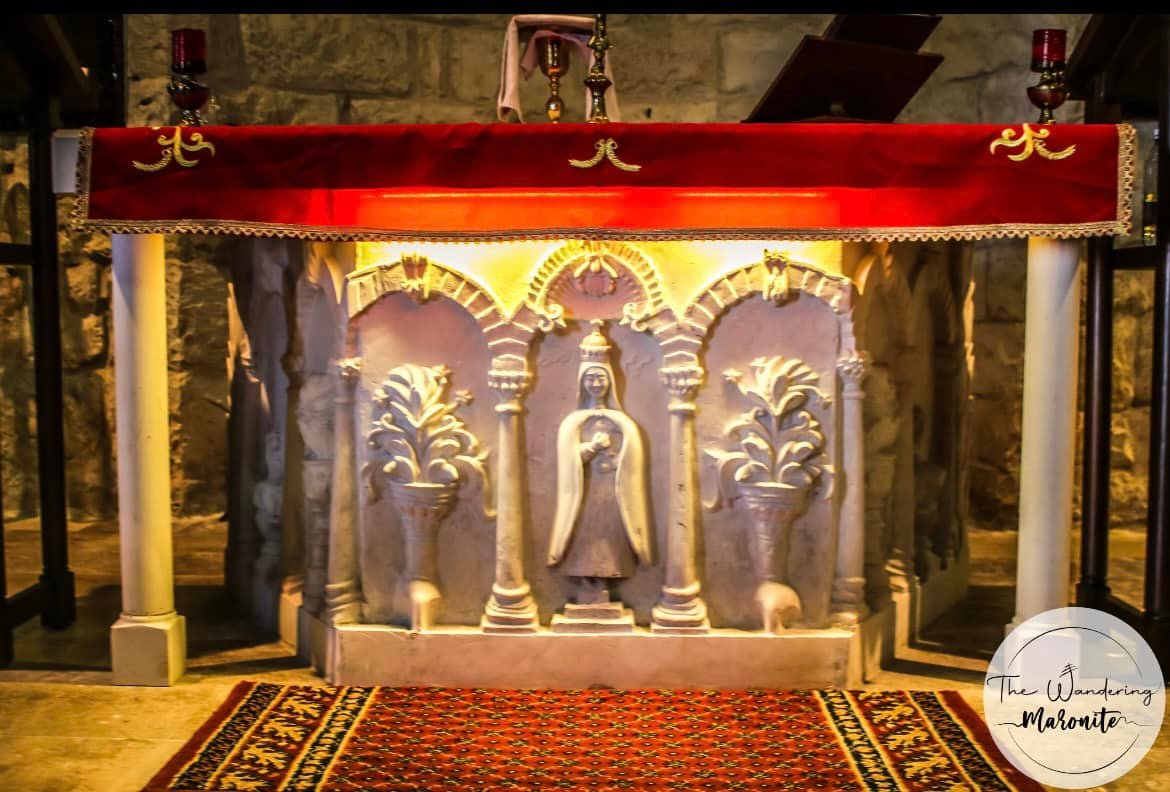
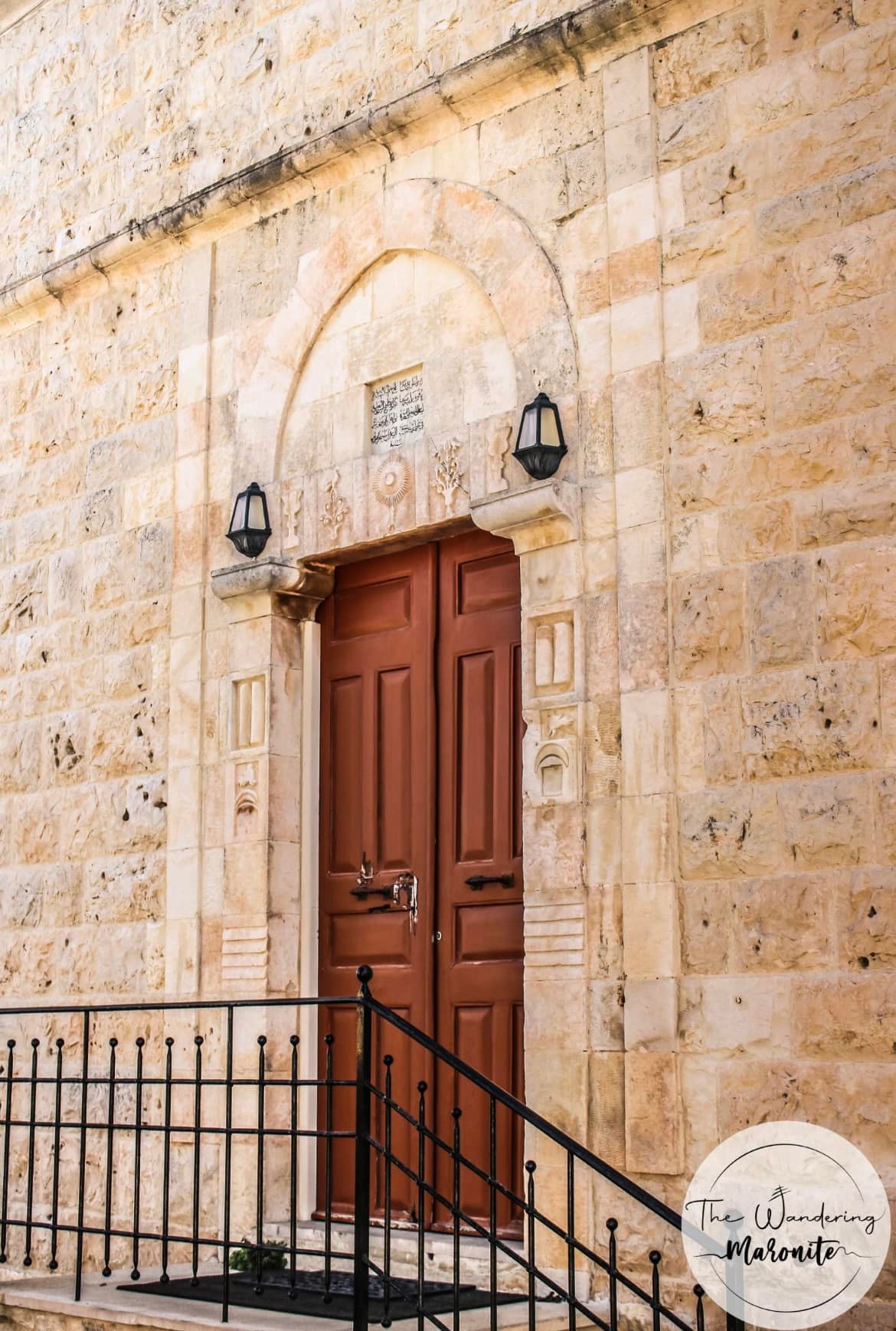
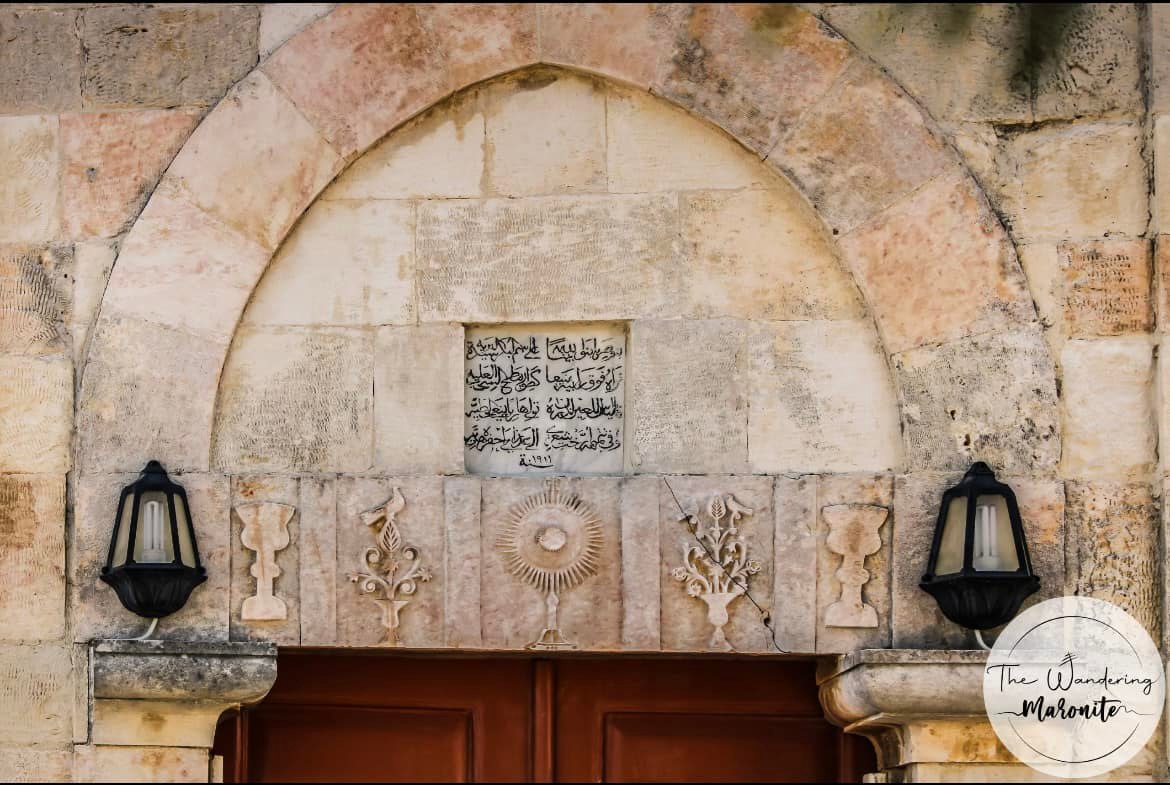
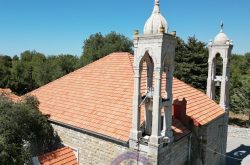
كنيسة السيّدة القديمة - صربا النبطيّةكان البناء أساسًا جزءً تابعًا للقلعة العثمانيّة القريبة منه، إشتراه أهل البلدة وحوّلوه إلى كنيسةٍ كرّسها المطران بولس بصبوص سنة ١٩١١. البناء كناية عن سوقٍ واحد مسقوفٍ بالقرميد. رُمّمت سنة ٢٠٠٥. تحوي الكنيسة لوحةً للعذراء محليّة الصنع تعرّضت للضرب بالرصاص خلال الحرب العالميّة الأولى.The old church of Our Lady - Sarba el NabatiehThe building was originally a part of the nearby Ottoman castle, the villagers bought it and converted it into a church that was consecrated by Bishop Boulos Basbous in 1911. The church consists of a single nave with a brick roof, it was renovated in 2005. In the church is displayed a local painting of the Madonna that holds marks of Ottoman bullets from World War I.
البناء أساسًا كان معبدًا فينيقيّ ثمّ رومانيّ. عُرف بالأزرق نسبةً للون الحجر الكلسيّ. مع قدوم المسيحيّة حُوّل المعبد إلى ديرٍ على اسم مار جرجس وكان الأكبر في جبّة المنيطرة. إختاره البطريرك يوحنّا مارون الثاني مقرًّا له سنة ٧٥٠، وذلك لصعوبة الوصول إليه، ولأن يانوح بحسب البطريرك الدويهيّ: "كانت من أشرف المجالِس في جِبَة المنيطرة وأهلها كثيرو العِبادة والغيرة". بقيت يانوح مقرًّا بطريركيًّا شبه ثابتٍ ما بين ٧٥٠ و١٢٧٧، لأن البطاركة تنقلوا مابين سنتيّ ١١٢٠ و١٢٠٠ بين ميفوق وهابيل ولحفد. بنى البطاركة بقرب المعبد كنيسةً صغيرة خاصة للبطاركة وأقبية وغرف. وبنوا كنيسة السيّدة خارج المحلّة. أقام البطاركة في يانوح، ما مجموعه أربعماية واثنتان وثلاثون سنة، منها ثلاثمائة وسبعون سنةً متواصلةً دون إنقطاع. مع قدوم الصليبيّين في عهد البطريرك يوسف الجرجسيّ إستبشر الموارنة خيرًا بحسب ابن القلاعي، فأُعيد اتصالهم بروما، وعاشوا فترةً من الإزدهار، ويذكر التاريخ أنّه في تلك الحقبة إستبدل الموارنة نوافيس الخشب بنواقيس حديدٍ في يانوح. لكنّ الفترة الصليبيّة شهدت العديد من القلاقل والمعارك ممّا استدعى تنقلاتٍ عديدةٍ للبطاركة واتخاذهم عدّة مراكز. ومع رحيل الصليبييّن وحملة المماليك أُحرقت يانوح، ولم تُجرى أبحاث أركيواوجيّة على الموضع لحين الإنتداب الفرنسيّ بداية القرن العشرين.
The blue monastery of St George - Yanouh
The building was originally a Phoenician than a Roman temple consecutively. With the locals conversion to Christianity the temple was consecrated as a church dedicated to St George. In 750 Yanouh was chosen as a patriarchal seat, it remained a nearly consistent seat between 750 and 1277. The patriarchs built near the temple a patriarchal chapel, many vaults and cells and the church of the Virgin Mary outside of the complex. With the Crusades during the pontificate of Patriarch Youssef el Gergesy, the Maronites entered a golden age, they reconnected with Rome. Yet the latter Crusader’s period saw unrest and struggles, that was the reason why many patriarchs used to change residences. In 1277 the patriarchs moved out of Yanouh. The seat was completly abandoned after the Crusaders left and the Mamluk’s campaign that destroyed the village. The site was excavated by the french archeological missions in the early XXth century.
ادنا هو لقب سريانيّ لمار طراخونيوس، وهو من القدّيسين الأكثر شهرة عند موارنة القرون الوسطى. بني هذا الدّير سنة ٥٠٩ على أنقاضٍ رومانيّة ما زالت ماثلة، ويتألّف من كنيسة بخوروسين ما يزال القسم الجنوبيّ منها ماثل. بقيّة الدّير ودير البنات أي دير الراهبات العابدات الذي بقربه أنقاض. قنطرة الحنية مزيّنة بالعديد من الصلبان والنقوش التي ترمز للتجسد والفداء. كان الدّير مقرًّا لأساقفة العاقورة مدى قرون ومن أشهرهم البطريرك يوحنا السابع العاقوري الذي توفي سنة ١٣٥٧.
The monastery of St Edna - Aqoura
Edna is a title given by syriacs to St Trakhonius, who was one of the most venerated saints by the medieval Maronites. The monastery was built in 509 over roman ruins that are still visible, and it consists of a two aped church, with the southern part of the church still standing. The rest of the church and monastery and the adjacent nunnery are all in ruins. The apse is decorated with crosses and symbols of the Incarnation and Redemption. The monastery was the seat of Aqoura’s bishops for centuries, the most famous of them was patriarch John VII El Aqoury who died in 1357.
كنيسة سيدة النياح للروم الأورثوذوكس وللروم الملكيّين الكاثوليك)
1660
Kfar Aaqab
Metn
Mount Lebanon
كانت بلدة كفر عقاب بلدة مهدّمة على يد المماليك في عام . ١٢٩٠ ولكن بعد قدوم بيت معلوف في عام ١٥٧٠ بدأت عمليات إعادة الترميم على أيديهم. كان أوّل ما رمّموه هي كنيسة صغيرة في أعلى البلدة وأطلقوا عليها اسم كنيسة سيدة الخرايب. في عام ١٦٦٠ وجدت عائلة معلوف أنّ عدد الناس ازداد لذلك قاموا ببناء كنيسة سيدة النياح. التي تتميّز بالطقس البيزنطي المعروف بـ المذبح الخاص به والأيقونات المميزة. تم تكبير هذه الكنيسة في عام ١٨٠٥ لتصبح كنيستين متلاصقتين وتحملان التصميم نفسه. في عام ١٦٦٦ ازداد عدد الناس أكثر فأكثر فاتفقوا على بناء كنيسة ثالثة تدعى كنيسة سيدة البشارة تحت شجرة معمّرة ضخمة. دامت مدة بناء الكنيسة من عام ١٦٦٦ حتى عام ١٧٧٠ وفي عام ١٧٧١ افتتحوا الكنيسة ومارسوا الصلاة فيها. كما أنشأوا إلى جانبها بيت الكنيسة كان أرضي فقط وأصبح مؤلف من طابقين.



Reviews are disabled, but trackbacks and pingbacks are open.